

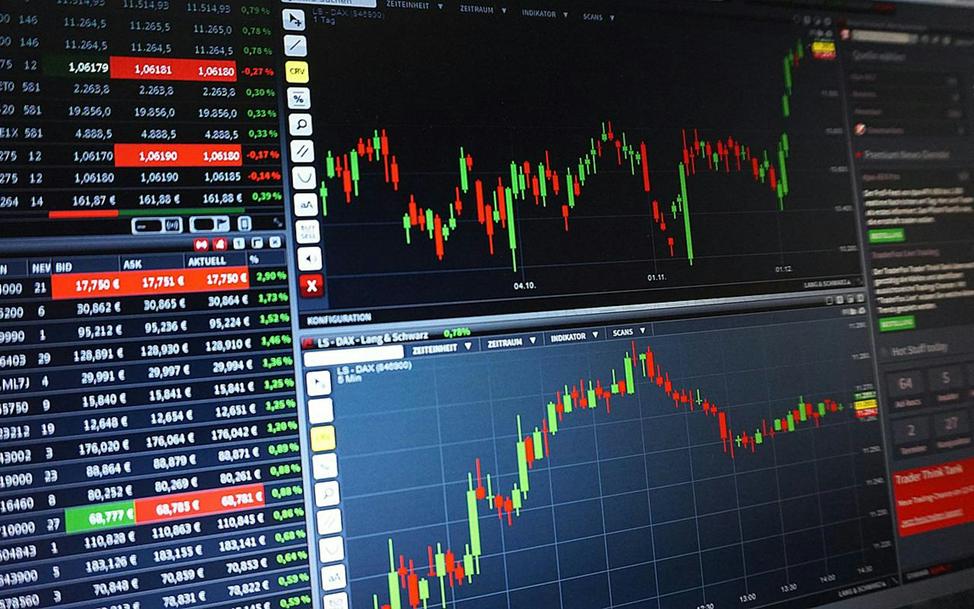
Most of the experienced players on the exchange actively use indicators that are an effective technical analysis tool. It is based on the approval of Charles Doe, according to which the price of the asset reflects all factors, including expected events. Technical analysis makes it possible to predict the movement of stock quotes with quite high accuracy. To do this, you need to find the desired algorithm by which price data is processed.
The TA indicators are based on precisely such mathematical algorithms. First of all, they are used to determine current trends and calculate the moments of price reversal. Such indicators are much older than computers used on exchanges. Previously, traders made all the calculations and built graphs manually, but their efficiency decreased from this.
With the advent of computers, the possibilities for creating new tools have become much wider, and it has become much easier to implement more complex calculation systems. But the classic indicators are still actively used and remain at the top of the ratings, as they are accurate and show high efficiency in trading systems.
Varieties of indicators
Market players have long classified indicators based on their functions. The first group includes trend indicators. They are used to fix trends in the dynamics of quotations. In most cases, such tools work on the basis of integrated algorithms, which allows them to effectively filter noise in the market and highlight dominant trends. But such indicators are not suitable for tracking market reversal points, as they consider them as noise.
The second large group of such auxiliary tools are oscillators using differential algorithms. They make it possible to quickly fix trends reversal points. At the same time, their use does not make it possible to see the difference between a real turn and even a short-term correction. In this regard, oscillators can help well during flat periods, but also erroneously signal entry points to the market with a stable trend.
The third group is volume indicators. Changes in the volume of transactions in the stock market may make adjustments to all price movements. Under such conditions, the use of tools working with them can filter the signals of other tools well, as well as act as a powerful amplifier.
All other indicators are usually combined into one group, as non-standardized. Their work cannot be included in any of the above categories. Such indicators include the means of constructing unusual graphs, calculating mutual influence, and so on. In this group, traders use the correlation indicator most actively. It allows you to calculate and graphically display how different assets correlate with each other.

Trend indicators
One of the most popular trend indicators is moving averages (MA). In all the candles of the price chart, they calculate the median cost for a certain period of time. In this case, the following algorithms for calculating the average value can be used: SMA, EMA, LWMA and SMMA. For all such tools, the direction of the curve or the location of the cost relative to it indicates the side in which the trend is moving. Typically, experienced traders use several MAs with different periods, and a market reversal is fixed at the point at which they intersect.
Another commonly used trend indicator is the Bollinger Bands. It is a volatility channel built on a normal moving average acting as a channel axis. Borders are defined in accordance with the usual price deviation. This indicator allows you to calculate the direction of the trend and determine how likely it is to change.
The ADX indicator is also among the most actively used in its group. He can determine the side in which the trend moves, as well as its strength. The algorithm is based on the calculation between the average potentials of bulls and bears. If any of them prevails, we can talk about a growing or falling trend. Its strength is determined by the numerical value on the main line.
Oscillators
Among this group, one of the best today is the MACD indicator. It calculates the distance between the EMA pair and allows you to capture the moments when the trend changes. Also, this indicator is used to obtain a leading price chart and data on the position of the main line relative to the signal.
Another commonly used oscillator is called RSI. It determines how strong ascending and descending impulses are, starting from the difference in the value of the asset when candles are closed for a certain time. In addition, RSI allows you to smooth out the sliding average curve.
Also in this group of indicators, a stochastic oscillator is very popular. With it, you can estimate the growth or drop in the value of the asset for a specific period of time. In addition, this indicator can generate lead signals.
Volume indicators

Traders usually use the horizontal volume indicator most actively. It makes it possible to see how the volumes of orders are distributed by price levels. This visualization is perfect for making forecasts about the dynamics of quotes.
The “On Balance Volume” indicator is also often used. In the process of building its line, traded volumes are summed up (if the asset price at the end of the candle is higher than at the beginning) or deducted (opposite situation). Such calculations make it possible to record the accumulation of long and short positions.
Popular volume indicators also include accumulation/separation. Here the calculations take place according to the same principle as that of “On Balance Volume”, but the consumables in the candles are the difference between “bull” and “bearish” contributions to price formation, multiplied by the traded volume.


